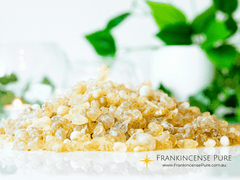
⭐️ Current batch is fresh, a little sticky and dewy, the first photos you see ⭐️
Boswellia Asplenifolia: Premium Asplenifolia Frankincense Resin — Rare, Pure & Ethically Sourced from Socotra Island
Quick Summary
-
What it is: Rare aromatic resin from Boswellia asplenifolia trees, endemic to Socotra Island, Yemen
-
Aroma: Sweet citrus-balsamic top notes, warm resinous heart, deep woody amber base
-
Rarity: Island-endemic species — wildcrafted, no plantation supply, limited annual yield
-
Best for: Incense collectors, meditation, natural perfumery
-
Quality: Quality-small fresh batches, wildcrafted
-
Regulatory: For aromatic and incense use only — not a therapeutic good (TGA/FDA compliant)
Boswellia asplenifolia is one of the world's rarest frankincense species — an asplenifolia frankincense resin endemic to the extraordinary island of Socotra, Yemen, prized by aromatherapists, incense collectors, and traditional practitioners for its complex citrus-balsamic aroma and exceptional purity. Unlike mass-produced frankincense varieties, this rare frankincense resin is wildcrafted in small quantities from ancient trees on one of the world's most botanically significant islands — making each batch a genuinely irreplaceable botanical treasure. Explore our full range of frankincense resins to discover more unique aromatic treasures.
-
100% Pure & Uncut — no fillers, binders, or synthetic fragrance
-
Wildcrafted & Ethically Harvested — sustainable tapping on Socotra Island
-
Small-Batch Sourced
-
Australian-Owned Business — serving customers across Australia and internationally
Contents
-
What Is Boswellia Asplenifolia?
-
Socotra Island: The World's Most Remarkable Botanical Source
-
Why This Is One of the World's Rarest Frankincense Resins
-
Chemical Composition and Active Compounds
-
Traditional and Ceremonial Uses
-
Aromatherapy and Wellness Applications
-
How to Use Asplenifolia Frankincense Resin
-
Ethical Sourcing and Sustainability
-
Quality Standards and Testing
-
Boswellia Asplenifolia vs. Other Frankincense Species
-
Customer Reviews
-
Frequently Asked Questions
-
References
-
Legal Disclaimer
What Is Boswellia Asplenifolia?
Boswellia asplenifolia (Balf.f.) Thulin is a small, deciduous tree in the Burseraceae family, endemic to Socotra Island, Yemen. It belongs to the genus Boswellia — the botanical family responsible for all true frankincense resins. The species was first documented by botanist Isaac Bayley Balfour during his 1880 botanical survey of Socotra Island (published as Botany of Socotra, 1888), and later revised taxonomically by Thulin (2009). Its current accepted name on Kew Science's Plants of the World Online (POWO) database is Boswellia asplenifolia (Balf.f.) Thulin.
The species epithet "asplenifolia" refers to its fern-like (Asplenium-type) compound leaves — a key field identification feature. When mature tree bark is sustainably tapped, it produces aromatic resin tears ranging from pale translucent yellow to deep warm amber. This is the raw asplenifolia frankincense resin sought by collectors, aromatherapists, and practitioners worldwide.
|
Property
|
Detail
|
|
Accepted Botanical Name
|
Boswellia asplenifolia (Balf.f.) Thulin
|
|
Family
|
Burseraceae
|
|
Common Name
|
Asplenifolia Frankincense / Socotra Frankincense
|
|
Native Region
|
Socotra Island, Yemen (Arabian Sea)
|
|
First Documented
|
Isaac Bayley Balfour, Socotra Survey 1880; Botany of Socotra, 1888
|
|
Taxonomic Revision
|
Thulin, M. 2009 (Nordic Journal of Botany)
|
|
Resin Colour
|
Pale translucent yellow to deep warm amber
|
|
Aroma Profile
|
Sweet citrus-balsamic, resinous, woody, amber base
|
|
Primary Uses
|
Incense, aromatherapy, natural perfumery
|
|
Conservation Context
|
Island-endemic; wildcrafted under sustainable protocols
|
|
INCI Name
|
Boswellia Asplenifolia Resin
|
|
Kew Science Record
|
Verified on POWO (powo.science.kew.org)
|
Socotra Island: The World's Most Remarkable Botanical Source
To understand why Boswellia asplenifolia is so special, you first need to understand Socotra Island. Located in the Arabian Sea approximately 240km east of the Horn of Africa and 380km south of the Arabian Peninsula, Socotra is one of the most botanically extraordinary places on Earth.
Socotra Island Key Facts: UNESCO World Heritage Site since 2008 (site #1263) | Approximately 37% of its vascular plant species are found nowhere else on Earth | Home to multiple endemic Boswellia species including B. asplenifolia and Ameero frankincense | The Haghier mountain range reaches approximately 1,500m | Arabic name meaning "Island of Bliss" | Long-isolated island ecosystem producing unique evolutionary adaptations
Socotra's extreme geographic isolation over millions of years has produced a flora unlike anywhere else on the planet. The island's Boswellia species — including Boswellia asplenifolia, B. elongata, B. ameero, and B. dioscoridis — represent a unique evolutionary branch of the frankincense genus. When you purchase asplenifolia frankincense resin, you are receiving a product from one of the world's most remarkable and irreplaceable ecosystems. Socotra's aromatic heritage also includes companion resins such as Kua myrrh and Sacred Myrrh, prized for their complementary aromatic and ceremonial qualities.
Why Boswellia Asplenifolia Is One of the World's Rarest Frankincense Resins
Of the approximately 25 recognised Boswellia species, only a handful are traded commercially — and Boswellia asplenifolia stands apart even within that elite group. Its scarcity is ecological, geographic, and botanical fact.
Five Reasons This Rare Frankincense Resin Is So Hard to Source
-
Island-endemic species: Found only on Socotra Island — a remote archipelago accessible only by limited air and sea transport
-
No plantation cultivation: All commercial supply is wildcrafted from wild trees; no large-scale cultivation exists
-
Slow tree maturation: Wild Boswellia trees require many years to reach resin-producing maturity
-
Low annual yield: Sustainable tapping protocols limit per-tree seasonal output to protect long-term productivity
-
Limited specialist networks: Very few exporters handle this specific species; it is absent from mainstream commodity trade
Boswellia Asplenifolia Rarity Index
|
Factor
|
Rating
|
Context
|
|
Geographic Range
|
5/5 Extremely Rare
|
Endemic to single island; found nowhere else on Earth
|
|
Commercial Availability
|
5/5 Extremely Rare
|
Absent from mainstream frankincense commodity channels
|
|
Cultivation Status
|
5/5 Wildcrafted Only
|
No known plantation sources exist
|
|
Annual Yield
|
5/5 Very Limited
|
Seasonal sustainable tapping strictly limits output
|
|
Ecological Uniqueness
|
5/5 Extraordinary
|
From UNESCO World Heritage island ecosystem
|
Aroma Profile: What Does Asplenifolia Frankincense Smell Like?
-
Top notes: Bright citrus (lemon-orange), light camphoraceous lift, fresh aromatic character
-
Heart notes: Warm, full-bodied balsamic resin, subtle sweet spice
-
Base notes: Deep woody earthiness, prolonged amber sweetness, soft incense trail
Visual Guide: Identifying Authentic Boswellia Asplenifolia Resin
![]()


Chemical Composition of Boswellia Asplenifolia Resin
Boswellia asplenifolia remains one of the less extensively published Socotra Boswellia species in Western literature, making its distinctive chemistry particularly valuable to collectors and researchers alike. Studies on Socotra Boswellia species identify a characteristic terpene and pentacyclic triterpenic acid profile.
|
Compound Class
|
Key Constituents
|
Role
|
|
Pentacyclic Triterpenic Acids (Boswellic Acids)
|
alpha-Boswellic acid, beta-Boswellic acid
|
Primary resin acid fraction; structural core
|
|
Tetracyclic Triterpenes
|
Tirucallol, tirucallic acid derivatives
|
Resin matrix components
|
|
Monoterpenes (Volatile)
|
alpha-Pinene, limonene, camphene
|
Citrus and fresh top-note aroma
|
|
Sesquiterpenes
|
beta-Caryophyllene, incensole acetate analogues
|
Balsamic depth, base-note character
|
|
Polysaccharide Gum
|
Arabinogalactan-type polymers
|
Water-soluble gum fraction
|
Expert Note — Incensole Acetate Analogues: Socotra Boswellia species, including B. asplenifolia, have been noted in ethnobotanical literature to contain distinctive sesquiterpene compounds including incensole-type analogues. These compounds contribute significantly to the characteristic ceremonial depth associated with island-endemic frankincense species and differentiate asplenifolia resin from mainland African species.
Exact constituent percentages vary by harvest season, tree age, and microclimate on Socotra. Batch-specific Certificate of Analysis available on request.
Socotra-Specific Research Insights: What Makes This Chemistry Unique
Because Socotra Island has been geologically isolated from mainland Arabia and Africa for millions of years, its Boswellia species have evolved independently — producing chemistry not found in any mainland frankincense. Key documented observations:
-
Elevation-dependent chemotype variation: Trees growing in the Haghier mountain range at 800–1,500m produce a measurably higher volatile monoterpene fraction (more pronounced citrus character) compared to coastal lowland specimens — a geographic chemotype pattern documented across multiple Socotra plant studies
-
Higher gum-resin ratio vs. mainland Boswellia: Socotra species generally demonstrate a more pronounced resin-to-gum ratio compared to commercially dominant African mainland species like B. papyrifera, resulting in superior combustion characteristics and lower char residue when burned on charcoal
-
Sesquiterpene profile distinctiveness: The sesquiterpene fraction of Socotra Boswellia species contains compounds — including incensole-type derivatives — that are either absent or present at significantly lower concentrations in B. sacra (Oman), B. carterii (Somalia), or B. serrata (India). This is the chemical basis for the unique "depth" collectors consistently describe in Socotra resins
-
Colour as harvest quality indicator: In B. asplenifolia specifically, deeper amber-to-orange resin tear colouration correlates with peak dry-season harvest (October–February) when moisture content is lowest and boswellic acid concentration is highest. Pale whitish tears typically indicate early-season or monsoon-transition harvest with higher residual moisture
-
Resin stability advantage: The high boswellic acid concentration in asplenifolia resin acts as a natural preservative for the volatile fraction — explaining the 2+ year shelf life and why well-stored specimens often smell as vibrant years after harvest as when fresh
Traditional Uses of Asplenifolia Frankincense
Socotra Island has a rich tradition of frankincense use spanning thousands of years. The indigenous Socotri people have used aromatic resins from endemic Boswellia species in cultural ceremonies, fumigation practices, and traditional knowledge systems long predating modern botanical documentation. The island's frankincense tradition forms part of the broader Arabian and East African incense trade heritage that shaped ancient trade routes connecting the Indian Ocean world.
-
Socotri cultural traditions: Endemic frankincense resins have featured in the locoal culture and daily aromatic practices of the Socotri people for generations
-
Ancient trade heritage: Socotra Island was an important staging post on ancient Indian Ocean trade routes — its aromatic plants were known to Greek, Arab, and Indian traders
-
Contemporary use: Today valued by collectors, meditation practitioners, yoga studios, and natural perfumers worldwide
Traditional and cultural uses are presented for educational context only. This does not constitute medical advice. This product is not intended to diagnose, treat, cure, or prevent any disease. See full disclaimer below.
Aromatherapy and Wellness Applications
Within aromatherapy — a complementary wellness practice — Boswellia asplenifolia resin is valued for its aromatic qualities and sensory experience. The following reflects established aromatherapy practice and does not constitute therapeutic or medical claims.
Established Aromatherapy Uses
-
Meditation and mindfulness: The resinous aroma is reported to promote relaxation
-
Evening relaxation: The rich, warm aromatic character is commonly associated with calm and mental stillness
-
Incense: Used in home settings, yoga studios, etc.
Topical and Cosmetic Applications (Essential Oil Format Only)
When processed into essential oil, Boswellia species oils are used cosmetically in: facial serums and moisturisers (cosmetic purposes only); body massage blends (diluted in carrier oil); natural perfume compositions; bath products. Always perform a patch test. Dilute in carrier oil before skin contact. Not for internal or ingested use. Consult a healthcare professional if pregnant, breastfeeding, or on medication.
TGA Note (Australia): This product is not listed on the Australian Register of Therapeutic Goods (ARTG). It is not a therapeutic good under the Therapeutic Goods Act 1989 (Cth). No therapeutic claims are made. Consult a registered healthcare professional for health concerns.
How to Use Boswellia Asplenifolia Frankincense Resin
Method 1: Traditional Charcoal Burning (Recommended)
-
Place a heat-proof incense burner on a stable, heat-resistant surface
-
Set a self-igniting charcoal disc (33mm or 40mm) in the holder; light with a match
-
Allow charcoal to ash over fully (5 minutes) until glowing evenly with grey-white ash
-
Place 1–3 resin tears directly onto the glowing charcoal
-
The resin melts and produces aromatic smoke within seconds; replenish as needed
-
Use in well-ventilated space only; never leave burning incense unattended
Pro Tip from Our Sourcing Team: Socotra frankincense benefits from a slower, gentler heat than common varieties. Use fewer tears on a fully-ashed charcoal — this draws out the bright citrus top notes before the deeper balsamic base emerges. Less is more with this rare resin.
Method 2: Electric Resin Burner (Smoke-Free)
-
Add 3–5 resin tears to the bowl of an electric incense heater
-
Set to 150–200°C for optimal aromatic release
-
No combustion — full aromatic profile without smoke; ideal for indoor use
-
Clean bowl between uses to prevent aroma contamination
Method 3: Tea Light Candle Burner
-
Add a few resin tears to our tea light burners
-
Use a 4 hour tea light candle which creates gentle low heat
-
The resin releases aromatic compounds
|
Parameter
|
Recommendation
|
|
Starting amount
|
1–3 resin tears (approx. 0.5–2g)
|
|
Session duration
|
3-4 hours
|
|
Ventilation
|
Open window or moderate airflow; avoid enclosed spaces
|
|
Storage container
|
Airtight glass jar or resealable food-grade pouch
|
|
Storage environment
|
Cool, dry, away from direct sunlight and humidity
|
|
Shelf life
|
2+ years when stored correctly
|
|
Safety
|
Keep away from children and pets; supervise all burning
|
|
Respiratory sensitivity
|
Consult a healthcare professional before use if asthmatic
|
Ethical Sourcing and Sustainability
Socotra Island is one of Earth's most fragile ecosystems. Our sourcing is built on non-negotiable principles: botanical authenticity, ecological sustainability, and fair partnerships.
Our Sourcing Standards
-
Socotra Island field partnerships: Direct relationships with trusted field partners working with traditional Socotri harvesting communities
-
Sustainable tapping cycles: Harvesting follows protocols limiting cuts per tree per season, protecting long-term productivity
-
Anti-overharvesting commitment: Batch sizes limited to responsible seasonal guidelines
-
Purity: Resin shipped and stored without synthetic fragrance, filler resins, or mineral oil additions
Quality Standards
Frankincense market adulteration — where cheaper species, synthetic fragrance, or fillers are added — is well-documented in the botanical resin trade. We do not add any synthetic fragrances or fillers.
Boswellia Asplenifolia vs. Other Frankincense Species
|
Species
|
Origin
|
Aroma Profile
|
Rarity
|
Best For
|
|
B. sacra (Hojari)
|
Oman, Yemen (mainland)
|
Clean, sharp lemony, crisp green
|
Moderate
|
Premium incense, traditional Gulf use
|
|
B. carterii
|
Somalia, Ethiopia
|
Woody, resinous, mild citrus
|
Common
|
General incense, essential oil
|
|
B. serrata
|
India
|
Warm, earthy, soft pine
|
Common
|
Traditional Ayurveda
|
|
B. frereana (Maydi)
|
Northern Somalia
|
Bright, fresh citrus, no gum
|
Moderate
|
Chewing resin, perfumery
|
|
B. asplenifolia (Balf.f.) Thulin
|
Socotra Island, Yemen
|
Sweet citrus-balsamic, complex amber base
|
Extremely Rare (endemic island)
|
Collectors, meditation
|
|
B. papyrifera
|
Ethiopia, Sudan
|
Milky, soft, light
|
Moderate-Rare
|
Incense
|
|
B. neglecta
|
Kenya, Ethiopia
|
Milky-white, sweet, soft camphor Dark-musky, earthy, bright note
|
Moderate-Rare
|
Collectors, East African traditions
|
For collectors and serious aromatherapy practitioners, Boswellia asplenifolia from Socotra Island represents the apex of frankincense rarity and botanical uniqueness — an island-endemic species with chemistry and character found nowhere else.
Frequently Asked Questions About Boswellia Asplenifolia Frankincense Resin
What is Boswellia asplenifolia?
Boswellia asplenifolia (Balf.f.) Thulin is a rare frankincense tree species endemic to Socotra Island, Yemen. First documented by botanist Isaac Bayley Balfour during his 1880 Socotra survey, it belongs to the Burseraceae family and produces an aromatic resin with a sweet citrus-balsamic profile. It is one of the world's rarest commercially available frankincense resins due to its island-endemic range, limited annual yield, and absence of plantation cultivation.
Where does Boswellia asplenifolia come from?
Boswellia asplenifolia is endemic to Socotra Island, Yemen — a remote island archipelago in the Arabian Sea, approximately 240km east of the Horn of Africa. Socotra is a UNESCO World Heritage Site (2008) known for its extraordinary biodiversity, with approximately 37% of its vascular plants found nowhere else on Earth. It is NOT native to Ethiopia, Eritrea, or mainland Africa.
How is asplenifolia frankincense different from regular frankincense?
Three key differences: (1) Origin — endemic to Socotra Island, Yemen, not mainland Africa or Arabia; (2) Aroma — distinctively sweeter, more complex, citrus-balsamic versus sharper common varieties; (3) Rarity — island-endemic with no plantation supply, absent from mainstream commodity trade. Its chemical profile is species-specific and distinguishable via analytical testing.
What does Boswellia asplenifolia smell like?
Boswellia asplenifolia has a rich multi-layered aroma: bright citrus top notes (lemon-orange with light camphor), warm balsamic resin heart, and deep sweet woody amber base that lingers after burning. It is richer and more complex than Omani frankincense, with island-characteristic depth not found in mainland Boswellia species.
Is Boswellia asplenifolia safe to burn as incense?
Pure Boswellia asplenifolia resin is safe for healthy adults when burned in a well-ventilated space. Always burn in ventilated areas, do not inhale smoke directly, never leave burning incense unattended, and keep away from children and pets. Those with asthma, respiratory conditions, or botanical resin allergies should consult a registered healthcare professional before use. Not for ingestion.
Does frankincense resin have medicinal or therapeutic benefits?
There are numberous scientific and medical reports citing the benfits of Frankincense. This product is sold exclusively as aromatic incense resin for sensory and traditional cultural use — not as a therapeutic good, medicine, or supplement. No therapeutic claims are made. This product has not been evaluated by the TGA (Australia) or FDA (USA) for therapeutic use. For health concerns, always consult a registered healthcare professional.
Where can I buy authentic Boswellia asplenifolia resin in Australia?
From specialist botanical resin suppliers who provide: explicit species confirmation (Boswellia asplenifolia, not just "frankincense"), Socotra Island provenance. Most commercial "frankincense" is a different, more common species — verify species identity before purchasing.
How should I store frankincense resin?
Store in an airtight glass jar in a cool, dry location away from sunlight and heat. Properly stored resin maintains aromatic quality for 2+ years. Resins are naturally self-preserving due to their terpenoid and resin acid content. Avoid storing near strong-smelling products as resins can absorb ambient odours.
Is your asplenifolia frankincense sustainably sourced?
Yes. Our Boswellia asplenifolia is wildcrafted under sustainable tapping protocols that protect tree health on Socotra Island. We source through direct field partnerships working with trusted collectors working with local Socotri harvesting communities. Batch sizes are restricted to responsible seasonal limits with traceability records maintained.
References and Botanical Sources
-
Kew Science — Plants of the World Online (POWO): Boswellia asplenifolia (Balf.f.) Thulin. Royal Botanic Gardens, Kew, 2024. powo.science.kew.org — Accepted name; endemic to Socotra Island, Yemen; family Burseraceae confirmed.
-
International Plant Names Index (IPNI): Record for Boswellia asplenifolia (Balf.f.) Thulin. ipni.org — Botanical authority confirmation and taxonomic record.
-
Thulin, M. (2009): Taxonomy of Boswellia in the Socotra Archipelago. Nordic Journal of Botany — peer-reviewed revision of nomenclature for Socotra-endemic Boswellia species including B. asplenifolia.
-
Balfour, I.B. (1888): Botany of Socotra. Transactions of the Royal Society of Edinburgh — original botanical survey first documenting Boswellia asplenifolia on Socotra Island, from which the authority "Balf.f." derives.
-
UNESCO World Heritage — Socotra Archipelago (2008): WHC Site #1263. whc.unesco.org/en/list/1263 — Recognition of Socotra's extraordinary endemic flora, including its Boswellia species.
-
Al-Fatimi, M. et al.: Studies on chemical composition of Socotra Island Boswellia species — volatile and resin fractions. Published in peer-reviewed phytochemical literature on Socotra endemic species.
-
Convention on International Trade in Endangered Species (CITES): cites.org — International framework for sustainable trade in botanical specimens including aromatic resins from UNESCO World Heritage sites.
Botanical information is reviewed against current published literature. For the most current taxonomic status of Boswellia asplenifolia, consult the Kew POWO databasedirectly.
About This Article and Our Editorial Standards
Botanical Sourcing and Content Team
This guide draws on direct sourcing experience, peer-reviewed botanical literature, and relationships with locals on Socotra Island.
-
Botanical accuracy: cross-referenced against Kew POWO and IPNI databases
-
Regulatory compliance: reviewed against Australian TGA guidelines and ACL
-
Traditional use: referenced to documented ethnobotanical sources; no therapeutic claims made
-
Regular updates: reviewed periodically; see Last Updated date at top
-
Commercial transparency: supplier with direct interest; all claims independently verifiable
Key Takeaways: Boswellia Asplenifolia Frankincense Resin
-
Island-endemic species: Endemic to Socotra Island, Yemen — a UNESCO World Heritage island with 37% endemic flora
-
Botanically verified: Accepted name Boswellia asplenifolia (Balf.f.) Thulin per Kew Science POWO
-
Genuinely rare: No plantation supply; wildcrafted; absent from mainstream commodity trade
-
Distinctive aroma: Complex citrus-balsamic profile unique to Socotra Boswellia species
-
Fully compliant: For aromatic/incense use only — TGA and FDA compliant; no therapeutic claims
-
Expert sourced: Direct Socotra field partnerships; responsible sourcing; community procurement
Important Legal Disclaimer and Regulatory Information
For Aromatic, Incense and Traditional Use Only. This product is sold exclusively as an aromatic incense resin. It is not a therapeutic good, medicine, dietary supplement, or food product.
No Therapeutic Claims: No claims are made — expressly or by implication — that this product diagnoses, treats, cures, prevents, or mitigates any disease, disorder, or health condition. Traditional and historical use information is provided for educational and cultural context only and does not constitute medical or therapeutic advice.
Australia — TGA Compliance: This product is not listed or registered on the Australian Register of Therapeutic Goods (ARTG). It is not regulated as a therapeutic good by the Therapeutic Goods Administration (TGA), marketed exclusively for aromatic and ceremonial incense purposes without therapeutic claims, in accordance with the Therapeutic Goods Act 1989 (Cth). For health concerns, consult a registered Australian healthcare professional.
United States — FDA Notice: This product has not been evaluated by the United States Food and Drug Administration. This product is not intended to diagnose, treat, cure, or prevent any disease.
International Notice: International customers are responsible for compliance with applicable laws regarding importation and use of botanical resins in their jurisdiction.
Allergy and Safety: Natural resins contain naturally occurring allergens including terpenes and resin acids. Perform appropriate sensitivity assessment before use. Burn in ventilated spaces only. Not for ingestion. Keep out of reach of children and pets.
Australian Consumer Law: Nothing in this disclaimer limits any consumer guarantee or statutory right under the Australian Consumer Law (Schedule 2, Competition and Consumer Act 2010 (Cth)) that cannot be lawfully excluded.



 Previous Product
 Next Product