⭐️ We ship the Lavender Oil World Wide ⭐️
100% Pure Lavender Essential Oil: Why New Zealand Lavandula angustifolia 'Avice Hill' Is Different
Lavender essential oil is one of the most popular and versatile natural products for aromatherapy, perfumery, and wellness. This page explores what makes New Zealand's Lavandula angustifolia 'Avice Hill' cultivar unique, who will benefit most from its use, and why choosing a pure, single-origin oil matters for quality and experience.
100% Pure Avice Hill Lavender Essential Oil – What Makes It Special?
Frankincense Pure offers 100% pure Lavandula angustifolia 'Avice Hill' essential oil - a specific true lavender cultivar developed in New Zealand and prized for its distinctively ester-rich chemistry. With typically higher linalyl acetate and lower linalool than many standard lavender oils, Avice Hill delivers a soft, sweet, floral aroma that sets it apart from generic or mass-market options.
This is undiluted, unblended essential oil from L. angustifolia 'Avice Hill' only - no synthetic fragrance, carrier oils or fillers. For Australian buyers seeking a premium lavender oil for diffusers, natural perfumery and carefully diluted topical blends, it represents a cultivar-specific choice backed by botanical transparency and evidence-informed sourcing.
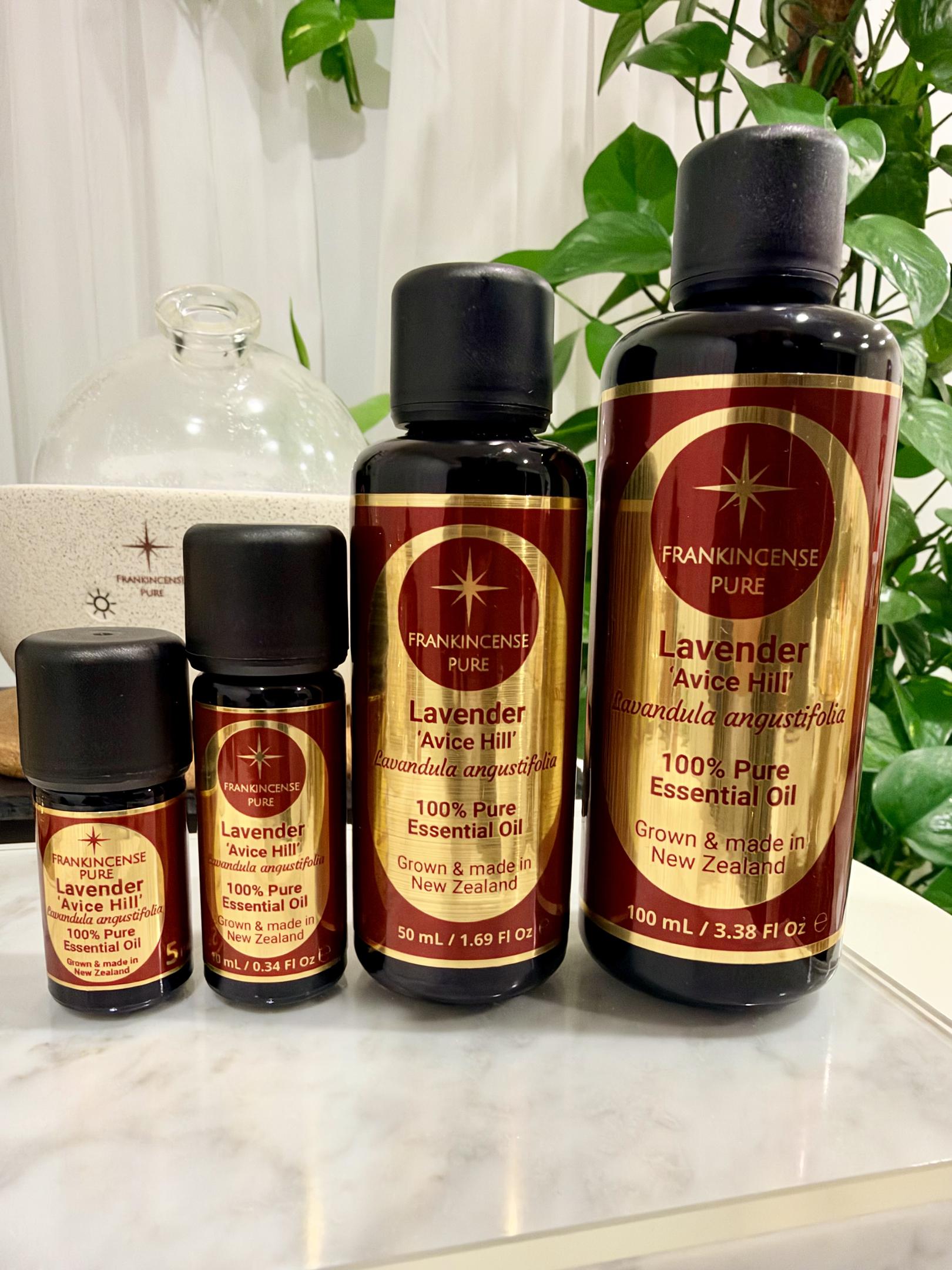
Verified Facts at a Glance
Everything you need to know about this oil, at a glance:
-
Botanical species: Lavandula angustifolia (true lavender, also called English lavender)
-
Cultivar: 'Avice Hill' - a New Zealand–selected true lavender cultivar; the cultivar's origin is NZ, though plants can be cultivated in other suitable regions
-
Plant part used: Flowering tops (spikes), harvested when oil content and aroma are at peak
-
Extraction method: Steam-distilled lavender essential oil - steam passes through harvested flowers, lifts volatile aromatic compounds, then condenses into essential oil and hydrosol
-
Typical aroma: Soft, sweet, floral, nuanced, generally low in camphor; suitable for fine perfumes and relaxing ambient scents
-
Ingredients: 100% pure Lavandula angustifolia 'Avice Hill' essential oil - no added synthetics, bases or carrier oils
-
Intended use: Aromatic use in diffusers, personal fragrance and well-diluted topical blends; not for ingestion
-
Supplier: Frankincense Pure, a family-owned Australian natural wellness retailer based in NSW
Why You'll Love This 100% Pure Lavender Essential Oil
Lavender essential oil is valued for its potential benefits for relaxation and sleep, its role in aromatherapy, and its sheer versatility. Here's why Avice Hill stands out:
-
Refined, elegant aroma – Avice Hill's sweet, rounded, floral scent is softer and less camphoraceous than many standard lavender oils. Its fragrance may help create a peaceful environment for meditation or simply enhance daily self-care.
-
Versatile for home and studio – Works beautifully in ultrasonic diffusers, oil burners, linen mists and natural perfume bases. Aromatherapy with lavender may improve overall wellness routines and can discourage certain insects when diffused.
-
Ideal for perfumery experiments – Its soft, ester-rich profile makes it a forgiving heart note, easy to blend with woods, resins and citrus. Lavender essential oil is used in perfumes and cosmetics worldwide - it appears in approximately 1% of analysed perfumes and remains one of perfumery's most versatile materials.
-
Evidence-informed choice – True lavender oils are among the most chemically studied essential oils. Lavandula angustifolia has over 90 reported constituents, and Avice Hill fits within this well-characterised group with a profile documented by independent lavender researchers.
-
Aligned with natural wellness values – Frankincense Pure's focus on purity, responsible sourcing and small-batch quality extends from their frankincense resin collection to this carefully selected lavender oil.
-
Complements frankincense collections – Lavender's floral sweetness layers beautifully over Boswellia and Commiphora resins. Try pairing it with Boswellia sacra essential oil for a soothing, resinous-floral accord.
What Makes Avice Hill Lavender Oil Different?
Many products labelled "lavender oil" in Australia are generic blends of multiple species, lavandin (Lavandula × intermedia - Lavandula hybrids are known as lavandins), spike lavender (L. latifolia), or synthetic fragrance oils with no botanical lavender content at all.
Avice Hill is built differently:
-
Cultivar-level identity – 'Avice Hill' is a named cultivar originally selected from L. angustifolia stock in New Zealand and granted Plant Breeder's Rights in 1996. The cultivar is named after Avice Hill (1906–2001), a Christchurch botanist and herb grower who championed lavender cultivation in Canterbury. Lavandula angustifolia has many cultivars like Hidcote and Munstead; Avice Hill sits within this genus and family but offers a distinct aromatic fingerprint.
-
Distinct chemistry – Published cultivar analyses report that Avice Hill's essential oil is strongly ester-dominated, with linalyl acetate often exceeding 40%, while alcohols (including linalool) typically remain below 25%. This shapes its softer, more rounded scent compared with linalool-heavy cultivars such as Jean Davis or Irene Doyle.
-
Low-camphor profile – Compared with lavandin or spike lavender, Avice Hill typically contains minimal sharp, camphoraceous notes. This makes it preferable for gentle ambient fragrance, fine perfumery and situations where a sweet, floral lavender - rather than a medicinal one - is the goal.
-
Single-origin style purity – Frankincense Pure sells this as a single-varietal, 100% pure essential oil, not pre-diluted or blended with cheaper species. High-quality lavender oil should be 100% pure and sourced ethically.
Natural variation exists between batches and farms. Chemistry shifts with soil, climate, harvest timing and distillation parameters, so avoid treating any published average as a batch guarantee.
How Is 100% Pure Avice Hill Lavender Oil Produced?
Lavender essential oil is distilled from Lavandula angustifolia flowers through a process that has remained remarkably consistent for centuries. Understanding each stage helps you appreciate what separates a quality oil from a commodity product.
From Cultivar to Bloom
A cultivar is a plant variety selected and maintained for desirable traits. 'Avice Hill' was developed via seedling selection from open-pollinated L. angustifolia plants in New Zealand and first marketed there in 1997. Growers select this cultivar for its fragrance quality and favourable oil yield. True lavender plants thrive in well-drained, dry soils and cool-to-temperate climates with full sun and distinct seasonal changes - conditions found across Canterbury, NZ, parts of southern Australia, and high-altitude Mediterranean regions like those in Italy. Plants begin new shoots in spring, with stems reaching harvest readiness by early summer when purple and blue flowers are at peak oil content.
Harvest and Steam Distillation
-
Harvesting flowering tops – Flower spikes are cut when many florets are open and the calyx and corolla are rich with volatile compounds. Timing matters: harvested too early, the oil lacks complexity; too late, ester content may decline as flowers set seed.
-
Steam distillation – Fresh or briefly wilted flowers are loaded into a still. Steam passes through the plant material, lifting volatile aromatic compounds from leaves, stems and flowers. The vapour travels through a condenser, cooling into a liquid mixture of hydrosol and essential oil.
-
Separation and resting – The distilled oil naturally separates from the hydrosol. After gentle filtration and a resting period to stabilise the aroma, the oil is ready for bottling. This settling phase allows the full aromatic complexity - the interplay of esters, terpenes and alcohols - to integrate.
Frankincense Pure selects 100% pure, steam-distilled batches of Avice Hill lavender oil consistent with their existing resin and essential oil sourcing philosophy. Lavender oil 'Avice Hill' is sourced from New Zealand's Alps, where growing conditions favour the cultivar's signature ester-rich profile.
Pure Essential Oil vs Fragrance, Diluted and Infused Oils
When you see "100% pure lavender essential oil" on a label, it should mean one specific thing. Here's how the main product categories compare:
-
Pure essential oil – Distilled from the plant only; undiluted; contains the complex mixture of naturally occurring constituents (including linalyl acetate, linalool and others). This is what Frankincense Pure offers.
-
Fragrance oil – Often a mix of synthetic aromachemicals, sometimes with no botanical lavender content; cheaper but not equivalent to true L. angustifolia oil.
-
Pre-diluted oil – True essential oil blended with a carrier oil (e.g., jojoba) and sold ready to apply; safer for skin but not "100% essential oil."
-
Lavender-infused oil – Lavender flowers macerated in a carrier; aromatic but chemically and functionally different from steam-distilled essential oil.
Frankincense Pure's Avice Hill product falls squarely in the first category. Lavender essential oil complies with EU 1223/2009 regulations for cosmetic use, and the distinction between these product types matters for both safety and value.
How Does Avice Hill Compare to Other Lavender Oils?
Choosing between lavender oil options depends on your aroma preferences and intended use. The table below compares four main categories based on published literature and ISO/Ph.Eur standards. Chemical and aroma notes represent general trends and can vary by batch.
Comparison Table: True Lavender vs Lavandin vs Spike Lavender
|
Oil Type
|
Botanical Identity
|
Typical Aroma Profile
|
Who Tends to Prefer It?
|
|
Avice HillL. angustifolia
|
Named cultivar of true/English lavender; NZ origin
|
Sweet, rounded, floral; high linalyl acetate (often >40%); low camphor; nuances of honey, musk and soft herbaceousness
|
Perfumers, aromatherapy enthusiasts and buyers wanting a refined, cultivar-specific lavender with minimal sharpness
|
|
StandardL. angustifolia
|
True lavender, various cultivars (e.g., Hidcote, Munstead, Vera, Compacta, Graves, Mark)
|
Floral, herbaceous, sweet; balanced linalyl acetate and linalool; low camphor
|
General aromatherapy users, cosmetic formulators, those seeking a classic lavender scent
|
|
Lavandin(L. × intermedia)
|
Natural hybrid of L. angustifolia × L. latifolia
|
Sharper, more herbaceous, higher camphor; intense, clean, sometimes medicinal
|
Cleaning products, room sprays, functional blends where a strong, fresh lavender note is desired
|
|
Spike lavender(L. latifolia)
|
Distinct species; native to Mediterranean regions
|
Strong camphor and 1,8-cineole; fresh, penetrating, medicinal
|
Functional and herbal blends; users who want an invigorating rather than calming lavender character
|
What Do Linalyl Acetate and Linalool Mean for Scent?
Linalyl acetate and linalool are two of the most significant naturally occurring constituents in true lavender essential oil. Understanding their roles helps explain why different cultivars smell distinct - and why Avice Hill has its particular character.
Linalyl Acetate: Softness and Sweet Floral Nuance
Linalyl acetate is an ester associated with the smooth, sweet, rounded aspects of lavender aroma. Published profiles of Avice Hill often report esters reaching up to approximately 50% of total volatile chemistry, with linalyl acetate frequently above 40%. This is higher than many other L. angustifolia cultivars and contributes directly to Avice Hill's gentle, fruit-sweet floral character. Other supporting compounds - including cis-β-ocimene (7–13%), β-caryophyllene (3–4%) and traces of α-santalene - add undertones of musk, honey, wood and gentle pepper.
Frankincense Pure does not publish batch-specific percentages unless backed by a current GC–MS for that lot. The figures above reflect general cultivar profiling from independent sources, not a guaranteed composition for every bottle.
Linalool: Fresh, Herbaceous Lift – and Sensitivity Considerations
Linalool contributes the fresh, slightly herbal aspect of lavender's aroma. Avice Hill is often reported as having relatively lower linalool than some other true-lavender cultivars, which softens the herbaceous edge in its scent. However, "lower" does not mean "absent" and does not guarantee an allergen-free product. Linalool is one of the EU-declared fragrance allergens when oxidised, and lavender oil has reported antimicrobial and anti-inflammatory properties that do not negate the need for caution around skin application.
Perform a patch test before applying diluted lavender oil to the skin, and seek professional advice if you have sensitive or highly reactive skin. Proper storage slows oxidation of linalool and other terpenes, helping preserve both aroma and skin compatibility over time.
How to Choose a High-Quality Lavender Essential Oil in Australia
Buying essential oils online requires a discerning eye. Use this checklist to assess any lavender oil before adding it to your cart:
Buyer's Checklist: What to Look For
-
Correct species and cultivar naming – Insist on labels specifying "Lavandula angustifolia" and, where relevant, the cultivar name such as 'Avice Hill'. Generic "lavender oil" may be a different species, a syn for a hybrid, or an undisclosed blend.
-
Origin and provenance – Distinguish between cultivar origin (e.g., New Zealand–developed Avice Hill) and the actual country or region where the plants were grown and distilled for the bottle you are buying.
-
100% ingredient transparency – Look for "100% pure essential oil" plus clear exclusions of synthetic fragrance and carrier oils. Check the ingredient list and product page carefully.
-
Extraction method – Prefer steam-distilled lavender essential oil for diffuser and perfumery use. Remove from consideration any product that does not specify an extraction method.
-
Packaging and storage – Miron Violet Glass bottles protect against light degradation. Store away from heat and direct sun, and replace caps promptly to reduce oxidation. Research shows that after two years, linalyl acetate and linalool content can drop significantly, shifting the aroma.
-
Price realism – Genuine, 100% pure L. angustifolia oil from a named cultivar costs more than bulk fragrance oils. Extremely cheap "lavender" is unlikely to be comparable in quality.
-
Supplier values and expertise – Buy from specialists in resins and essential oils - like Frankincense Pure - who focus on ethical sourcing and small-batch stock rather than mass-market form.
How Can You Use Avice Hill Lavender Essential Oil Safely?
This is an aromatic product, not a therapeutic or ingestible remedy. Here's how to enjoy it responsibly.
Diffusers and Home Fragrance
Add 10-15 drops of 100% pure lavender oil to an ultrasonic diffuser or traditional oil burner (follow your device's instructions for the right amount and water volume). Lavender is a natural sleep aid that may improve sleep quality when diffused during an evening wind-down, in a reading nook, or for bathroom spa ambience. The experience of lavender aroma can enhance daily self-care and reportedly may help create a calming atmosphere.
Keep diffusers out of reach of children, ensure ventilation, and avoid continuous diffusion in small, unventilated rooms - particularly where pets are present.
Natural Perfumery and Scent Blends
Avice Hill's sweet, ester-rich profile makes it a perfect floral heart note in personal perfume oils, solid perfumes and room sprays. Try these pairings:
Ester-rich Avice Hill can soften more angular materials in a blend. Lavender oil is used in balms and salves, and lavender essential oil is commonly used for massage therapy when properly diluted. Encourage small test batches before committing to a long production run.
Diluted Topical Applications
Topical application of lavender oil requires dilution with a carrier oil - never apply neat to skin. General guidance for adults suggests 0.5–2% essential oil in a carrier oil for leave-on use. Diluted lavender oil can soothe minor skin irritations and blemishes, and lavender oil can support healing of minor wounds when diluted. Massaging lavender oil onto temples can ease tension headaches, and using lavender oil in massage can help relax tense muscles. Lavender oil helps calm the nervous system and may reduce cortisol levels when applied in massage.
Dry lavender oil should not be applied directly to bathwater to avoid skin irritation - always pre-dilute in a carrier oil or dispersant before adding to a bath. Inhaling lavender aroma is reported to help alleviate mild anxiety or tension, but avoid the eye area and broken skin, and consult a qualified health professional if you have existing medical conditions.
Lavender oil can be diluted for aromatherapy applications in a wide range of contexts, but always perform a patch test on a small area 24 hours before wider use.
Important Safety Notes
-
No ingestion – Lavender essential oil should not be ingested. It is not a food product. (Note: lavender flowers are used in culinary dishes like herbes de Provence, but that is a different form entirely from concentrated essential oil.)
-
Pregnancy and breastfeeding – Consult a qualified practitioner before any essential oil use.
-
Children and babies – Extra caution and lower exposures recommended. Avoid direct skin use and strong diffusion around infants unless guided by a qualified professional.
-
Pets – Some animals, particularly cats, can be sensitive to essential oils. Provide escape routes, reduce intensity and seek veterinary guidance for heavy use.
-
Storage – Keep bottles tightly closed, out of reach of children, away from direct sunlight and heat sources. Proper storage preserves both aroma and safety.
Who Is Avice Hill Lavender Essential Oil Best For?
If you value cultivar-specific quality and a refined aromatic experience, this oil fits your needs:
-
Aromatherapy enthusiasts wanting a refined, true-lavender aroma for their diffuser
-
Perfumers and fragrance hobbyists who value cultivar-specific nuance and sweet floral notes in their perfumes
-
Natural wellness customers who already enjoy frankincense oils and myrrh resins and want a complementary floral oil from the same trusted source
-
Gift buyers seeking a premium, evidence-informed essential oil sourced by an Australian specialist retailer
-
People who prefer lavender oils with lower camphor and a gentler, more rounded profile than typical lavandin-based options
Frequently Asked Questions
Is Avice Hill a different species of lavender?
No. Avice Hill is not a different species - it is a named cultivar of Lavandula angustifolia (true/English lavender), originally selected in New Zealand from angustifolia stock. A cultivar is a variety within a species chosen for specific traits, much like how Hidcote and Munstead are other cultivars of the same species. Frankincense Pure's oil is 100% L. angustifolia.
How does Avice Hill lavender essential oil smell compared with regular lavender?
Avice Hill is typically softer, sweeter and more floral than many standard lavender oils, with minimal camphor. Its high ester content gives it a rounded, fruit-sweet character rather than a sharp or medicinal edge. Personal perception varies, and environmental factors and batch differences can subtly shift the scent. Lavender oil is popular for its calming floral scent associated with relaxation.
Is 100% pure lavender oil safer for sensitive skin?
"100% pure" refers to the absence of fillers or synthetics - it does not guarantee freedom from irritation. Natural constituents like linalool can still trigger reactions in some individuals, especially when oxidised. Always dilute in a carrier oil, perform a patch test, and seek professional advice if you have sensitive or reactive skin.
What is the difference between lavender essential oil and lavandin?
Lavender essential oil (L. angustifolia) and lavandin (L. × intermedia) come from related but distinct plants. True lavender is softer and more floral; lavandin is often sharper, more herbaceous and camphoraceous, with higher oil yields per plant. Both can be high quality, but Avice Hill is chosen specifically for its particular true-lavender character.
Can I use Avice Hill lavender oil in my diffuser every night?
Moderate, intermittent use is best. Run your diffuser for 30–60 minutes, then turn it off. Ensure ventilation and observe how household members and pets respond. Continuous around-the-clock diffusion is not recommended.
How should I store my lavender essential oil so it lasts?
Store in a cool, dark place with the bottle tightly closed, away from heat sources, humidity and direct sunlight. Proper storage slows oxidation and helps preserve aroma integrity over time - research has shown that linalyl acetate and linalool levels can decrease significantly over two years of storage.
Where can I buy Avice Hill lavender essential oil in Australia?
Australian customers can buy and order 100% pure Lavandula angustifolia 'Avice Hill' essential oil directly from Frankincense Pure. Orders ship from New South Wales to Australia and around the world, with express shipping options available. Check the Frankincense Pure website for current product options, sizes and delivery details.
Ready to Experience Avice Hill Lavender?
This 100% pure Lavandula angustifolia 'Avice Hill' essential oil offers cultivar-specific, sweet floral character from a trusted Australian specialist in resins and essential oils. Whether you add it to your diffuser, layer it into a natural perfume with Omani Boswellia sacra, or simply enjoy the experience of one of the world's most refined lavender cultivars - this oil delivers genuine quality.
Explore the full range of essential oils at Frankincense Pure and discover what cultivar-specific purity smells like.