Suhul Myrrh Resin — Somalia's Rarest Grade of Commiphora myrrha
By Frankincense Pure Editorial Team · Updated 2026-07-21
Suhul myrrh resin (also searched as suxul myrrh) is the rarest grade of Commiphora myrrha (Nees) Engl. — a thorny, drought-tolerant tree native to Somalia's arid bushland that produces resin on its own at natural branch weak points, with no cutting or tapping needed. "Suhul" (Arabic: سهل, "easy" or "yielding") nods to that effortless, self-produced exudation. Somalia remains this tree's definitive home, and Suhul is widely regarded as the premium myrrh resin Somalia is best known for — rich, spicy-licorice, and deeply aromatic, and prized by incense practitioners, perfumers, and formulators worldwide. That rarity is exactly why Frankincense Pure ships genuine Suhul Myrrh internationally from Australia, in pea-sized and chunk forms, with free express shipping within Australia on orders AU$100+. Shop Suhul Myrrh Resin — sourced fresh from Somalia each season, while stock lasts.
Important notice: This product is sold as a raw botanical resin for incense, aromatic, and traditional use only. It is not a listed medicine under the Australian Therapeutic Goods Administration (TGA) and has not been approved by the U.S. Food and Drug Administration (FDA) for the diagnosis, treatment, cure, or prevention of any disease or health condition. All references to historical or traditional use on this page are informational and ethnobotanical, not therapeutic claims. Always consult a qualified healthcare professional before using any botanical product for health purposes.
-
Botanical species: Commiphora myrrha (Nees) Engl. — Family Burseraceae
-
Common names: Myrrh, Somali myrrh, Suhul myrrh (pre-harvest, no-wound grade)
-
Origin: Wild-collected from Somalia's East African bushland
-
Harvest method: No cutting or tapping — resin collected freely after the rainy season
-
Aroma: Spicy-licorice, settling into a sweet, woody, balsamic base
-
Key constituents: Furanoeudesma-1,3-diene, curzerene, lindestrene (40–60% of the essential oil fraction)
-
Form sold: Raw resin chunks — pea-sized and larger
-
Ships from: Australia — internationally, with free express shipping within Australia on orders AU$100+
Key Takeaways

-
Rarest grade of Commiphora myrrha: collected before any deliberate tapping, at natural branch weak points, after the rainy season
-
Visibly and aromatically distinct: paler, sweeter, and less bitter than tapped grades
-
Well-characterised phytochemistry: furanoeudesma-1,3-diene, curzerene, and lindestrene typically make up 40–60% of the essential oil fraction
-
Long trade history: Somalia remains the world's primary commercial source of Commiphora myrrha today
-
Sustainable by design: no-wound harvesting keeps bark intact and supports long-term yield
-
TGA and FDA compliant: sold as a raw botanical/aromatic material only, with no therapeutic claims
What Is Suhul Myrrh Resin?
Suhul is the pre-harvest, no-wound grade of Commiphora myrrha resin from Somalia, collected without ever deliberately wounding the tree. Standard harvesting cuts the bark to get resin flowing; Suhul skips that step. After the rainy season, harvesters simply gather the resin tears the tree has already produced on its own at natural branch junctions — a defence response seen across the whole Burseraceae family, which also includes frankincense, copal, and elemi. Because the bark stays undamaged, the resin comes out lighter in color, sweeter, and less bitter than tapped grades.

What sets Suhul apart:
-
No cutting or tapping — collected after the rainy season, before the tapping season begins
-
Noticeably paler, sweeter, and rounder in aroma than tapped grades
-
Lower oxidative exposure, since intact bark avoids the wound-site oxidation pathway
-
Bark stays intact, supporting long-term, sustainable resin production
-
The preferred raw material for artisan perfumers and incense formulators
Where It Grows and How It's Harvested
Somalia is the heartland of Commiphora myrrha, supplying most of the world's commercial resin from arid bushland across its interior and coastal lowlands — most densely in the Sanaag, Bari, Nugaal, and Togdheer regions. The tree is small and scrubby, 3–4 metres tall, with long thorns that create natural weak points where resin seeps out on its own, encouraged by dry winds, temperature swings, and grazing contact.

The seasonal harvest cycle:
-
Rainy season: resin biosynthesis accelerates as the tree responds to growth and structural stress
-
Post-rain drying: resin tears harden at natural exudation points across bark and branches
-
Suhul harvest: harvesters gather these naturally exuded, hardened tears before any deliberate tapping begins
-
Tapping season: deliberate incisions follow, producing the conventional, darker, more bitter grade
Deliberately wounded bark introduces oxidative stress and microbial exposure that darkens the resin and increases bitterness. Suhul tears, drawn from intact bark, avoid that pathway — which is why formulators rate it the cleaner, more stable grade.
What Does Suhul Myrrh Look, Smell, and Feel Like?

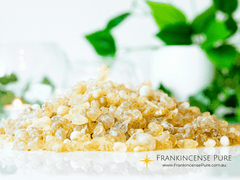
Standard Commiphora myrrha resin is deep reddish-brown, dense, and richly pigmented. Suhul, by contrast, is noticeably lighter, sweeter, and far less bitter — collectors say the difference is obvious at a glance. Because it forms without a wound response, the sharper, more medicinal notes that oxidative stress creates in tapped resin never develop.
The aroma unfolds in stages: a bright, spicy-licorice top note close to fresh anise, an earthy, faintly woody heart, and a soft balsamic sweetness that lingers long after the resin stops smoking. Raw chunks are firm and brittle at room temperature, softening with gentle warmth; on a charcoal disc they melt into a sustained, less acrid smoke than lower-grade myrrh. It's why perfumers and incense blenders reach for Suhul when they want myrrh's warmth without the harshness.
|
Attribute
|
Suhul Myrrh (Somalia)
|
|
Color
|
Pale amber to golden-brown
|
|
Texture
|
Firm, brittle; softens with gentle warmth
|
|
Top note
|
Spicy, licorice-like, fresh incense
|
|
Heart note
|
Earthy, woody, faintly resinous
|
|
Base note
|
Sweet, balsamic, long-lasting
|
|
Smoke character
|
Rich, full-bodied, less acrid than tapped grades
|
Suhul vs Standard Commiphora myrrha
Frankincense Pure carries both grades. Suhul is lighter, sweeter, and less bitter — the preferred choice for refined incense work, perfumery, and buyers who prioritise sustainable, no-wound sourcing. Standard Commiphora myrrha resin carries a sharper, more pungent character better suited to traditional oral-hygiene preparations and robust incense blends, and its higher yield-per-tree makes it more competitively priced.
|
Factor
|
Pea-Sized Form
|
Chunk Form
|
|
Measurement
|
High — consistent sizing
|
Moderate — variable weight
|
|
Burn consistency
|
Even, predictable
|
Slower, more sustained
|
|
Best for
|
Incense blending
|
Traditional burning, display
|
How Suhul Myrrh Compares to Other Myrrh Varieties
Suhul myrrh is one of several distinct myrrh resins Frankincense Pure carries, each from a different species and origin with its own aromatic character.
|
Variety
|
Species
|
Origin
|
Aroma Character
|
|
Suhul Myrrh
|
Commiphora myrrha
|
Somalia
|
Spicy-licorice, woody, sweet balsamic drydown
|
|
Kua Myrrh
|
Commiphora kua
|
Socotra, Yemen
|
Warm, earthy, amber-sweet spice
|
|
Yemeni Myrrh
|
Commiphora myrrha
|
Yemen
|
Fresh citrus top; warm incense drydown
|
|
Ornifolia (Aksha) Myrrh
|
Commiphora ornifolia
|
Socotra, Yemen
|
Sweet, syrupy, nuanced spice
|
Compared the grades and ready to buy? Frankincense Pure ships both refined Suhul and standard tapped Commiphora myrrha resin directly from Somalia in small, fresh batches. Shop Suhul Myrrh Resin to secure this season's harvest.
Documented Traditional and Aromatic Uses
Myrrh resin benefits generally fall into three categories: aromatherapy (incense and home fragrance), skincare (formulator use in creams and balms), and oral health (traditional water-soak preparations).
Compliance note: The uses below reflect documented historical, ethnobotanical, and current industry practice — not therapeutic claims. Suhul myrrh raw resin is sold as a botanical and aromatic product only.
|
Use
|
What It Involves
|
|
Incense & home fragrance
|
Resin chunks melted on a charcoal disc or tealight burner for a sustained, fragrant smoke
|
|
Fine perfumery
|
Used as a raw base-note material via maceration, enfleurage, or solvent extraction by formulators
|
|
Traditional oral hygiene
|
Historically soaked in water for several days in East African and Middle Eastern practice
|
|
Skincare formulation
|
Used by cosmetic formulators as a scent-and-tradition ingredient in creams, balms, and oils
|
Reported Benefits of Suhul Myrrh Resin
Compliance note: The points below reflect what incense burners, perfumers, and formulators commonly report from historical use and hands-on experience — not clinical findings or therapeutic claims.
-
Calming, aroma — Suhul's sweet, balsamic smoke is widely reported to create a warm, settled atmospheric fragrance.
-
A cleaner perfumery base note — perfumers report that Suhul's rounder, less bitter profile blends more smoothly into fine-fragrance compositions than sharper, tapped-grade myrrh.
-
Traditional oral hygiene use — historically soaked in water for several days in East African and Middle Eastern practice; an ethnobotanical use, not a substitute for professional dental care.
-
A scent-and-tradition skincare ingredient — formulators value myrrh resin for its aroma and long history of traditional use in balms, creams, and oils, separate from any cosmetic-efficacy claim.
-
Longer, cleaner burn — because Suhul forms without a wound response, incense users consistently report smoother aromatics and a longer-lasting balsamic dry-down than standard tapped resin.
These are documented patterns of use and user-reported experience, not medical outcomes. Anyone considering Suhul for a health-related purpose should speak with a qualified healthcare professional first.
Botanical and Phytochemical Profile
Commiphora myrrha (Nees) Engl. sits in the Burseraceae family, order Sapindales, and wild Commiphora myrrha Somalia populations remain the species' main commercial source today. Its phytochemistry comes down to a small set of dominant volatile sesquiterpenes — furanoeudesma-1,3-diene, curzerene, and lindestrene — which typically make up 40–60% of the essential oil fraction and give genuine Somalia myrrh its signature spicy-licorice aroma. Raw resin also carries triterpenes, polysaccharides, and resin acids well beyond that volatile fraction, which is why whole resin and steam-distilled essential oil are such different products.
|
Rank
|
Classification
|
|
Family
|
Burseraceae
|
|
Genus / Species
|
Commiphora myrrha (Nees) Engl.
|
|
Native range
|
Somalia; also Ethiopia, Djibouti
|
|
Growth form
|
Multi-stemmed shrub to small tree, 3–4 m, densely thorned
|
|
Parameter
|
Suhul (Spontaneous Exudate)
|
Tapped (Deliberate Wound)
|
|
Bark integrity
|
Fully intact — no wound
|
Deliberately breached
|
|
Oxidative exposure
|
Minimal
|
Elevated at wound site
|
|
Furanoeudesma-1,3-diene
|
Higher
|
Lower (wound alters ratios)
|
|
Annual yield by volume
|
Limited by natural exudation
|
Higher by volume
|
|
Best suited for
|
Fine perfumery, refined incense, skincare formulation
|
Traditional incense, oral preparations
|
How to Use Suhul Myrrh Raw Resin Safely
Safety notice: Keep away from children and pets. Do not ingest. Do not apply undiluted resin directly to skin. Burn only in well-ventilated spaces. Individuals with asthma, respiratory conditions, or who are pregnant or breastfeeding should consult a healthcare professional before use. Never leave burning resin unattended.
Charcoal disc (full, sustained aroma): Place a self-igniting charcoal disc in a heat-safe burner with sand or ash in the base. Light the edge and let it fully ignite (5–10 minutes) until a grey ash layer forms, then place 1–3 small resin pieces on the glowing disc and burn in a well-ventilated room, refreshing pieces as they burn through.
Tealight burner (gentler release): Fill the dish with water, add 2–4 small resin pieces, then light the tealight beneath and let the water warm gradually, topping it up as needed.
Store raw resin in a sealed container away from direct sunlight and heat — properly stored, it retains its aromatic character for several years.
Why Provenance and Species Verification Matter
Species substitution and mislabelling are common in the global myrrh trade. A listing that just says "myrrh resin," with no species or origin named, gives you no real way to judge what you're buying.
-
Species transparency — confirms Commiphora myrrha (Nees) Engl., not a generic "myrrh"
-
Origin specificity — Somalia named directly, not a regional catch-all
-
Grade identification — Suhul distinguished explicitly from standard tapped grades
-
Ethical sourcing — fair-market purchasing that supports sustainable wild-collection
Frankincense Pure meets all four criteria, sourcing Commiphora myrrha directly from Somalia in small, fresh batches.
Frequently Asked Questions
What is Suhul Myrrh Resin?
The pre-harvest, no-wound grade of Commiphora myrrha raw gum resin from Somalia, produced freely at natural branch weak points after the rainy season, before any cutting or tapping.
Is Suhul Myrrh Resin a medicine or therapeutic product?
No. It is sold exclusively as a botanical and aromatic product. It is not TGA-listed or FDA-approved for treating any condition — consult a healthcare professional for health-related questions.
How does Suhul differ from standard Commiphora myrrha?
It's collected before any deliberate tapping, producing resin that's lighter in color, sweeter, and less bitter, with lower oxidative exposure and a higher concentration of key sesquiterpenes.
Is myrrh resin the same as myrrh essential oil?
No. Raw resin is the whole, unprocessed exudate, containing sesquiterpenes, triterpenes, polysaccharides, and resin acids. Essential oil is a steam-distilled extract isolating only the volatile aromatic fraction. Frankincense Pure sells raw resin only.
How should I store Suhul Myrrh Resin, and is it safe to burn indoors?
Store in a sealed container away from sunlight and heat for long shelf life. Burn only in well-ventilated spaces; those with asthma or respiratory conditions, or who are pregnant or breastfeeding, should consult a healthcare professional first.
Shop Suhul Myrrh Resin at Frankincense Pure
Ready to buy Suhul myrrh? Order genuine Suhul Myrrh and standard Commiphora myrrha resin directly from Frankincense Pure, sourced from Somalia and available in pea-sized and chunk forms. Orders ship internationally from Australia; USA customers see tariffs included in the listed price, with no fees on arrival. Stock is limited by season and harvest yield.
General disclaimer: All information on this page is provided for educational, ethnobotanical, and aromatic product reference purposes only. Frankincense Pure does not make any therapeutic, medicinal, or health claims in relation to this product. This product has not been evaluated by the TGA or the FDA. It is not intended to diagnose, treat, cure, or prevent any disease or health condition. If you are pregnant, breastfeeding, taking medication, or have a medical condition, consult a qualified healthcare professional before use. Keep out of reach of children and pets.